Ultimate Guide to the Eku Weapon: History, Techniques, and Cultural Significance
The Eku weapon, a traditional wooden implement originally used in Okinawan martial arts, has captured the interest of martial artists and historians alike. Emerging from humble beginnings as a tool for fishermen, the Eku has evolved into a formidable weapon used in various martial arts disciplines. Its unique design and technique offer a fascinating glimpse into the adaptability and ingenuity of Okinawan culture. With a long handle and broad, flat blade, the Eku is often compared to a boat oar, yet it possesses a deadly precision that makes it a valuable asset in any martial artist's arsenal.
While the Eku weapon might seem simple at first glance, its effectiveness lies in the skillful handling and mastery of techniques that have been passed down through generations. This weapon is a testament to the resourcefulness of the Okinawan people, who transformed a practical fishing tool into a martial arts weapon. The Eku requires a deep understanding of balance, timing, and leverage to wield effectively, making it a rewarding tool for practitioners dedicated to mastering its use.
In this comprehensive article, we will delve into the rich history of the Eku weapon, explore the techniques and training methods associated with it, and examine its cultural significance in Okinawan martial arts. Whether you're a seasoned martial artist or simply curious about traditional weaponry, this guide will provide valuable insights into the world of the Eku weapon. Join us as we uncover the secrets of this remarkable tool and learn why it continues to captivate martial artists around the world.
History of the Eku Weapon
The history of the Eku weapon is deeply rooted in the cultural and practical needs of Okinawan fishermen. Originally designed as a simple wooden oar, the Eku was a vital tool for maneuvering boats and navigating the waters surrounding Okinawa. However, during a time when the carrying of traditional weapons was restricted, the resourceful Okinawans began to adapt everyday objects for self-defense and combat. Thus, the Eku was transformed from a fishing implement into a formidable martial arts weapon.
As the Eku evolved, it became an integral part of Okinawan martial arts, particularly in disciplines such as Kobudo. The weapon's design, with its long handle and wide blade, allowed practitioners to develop unique techniques that utilized its reach and leverage. Over time, the Eku became not only a practical tool but also a symbol of Okinawan ingenuity and resilience.
Throughout the years, the Eku's popularity spread beyond Okinawa, finding a place in various martial arts styles across the world. Its inclusion in martial arts demonstrations and competitions has helped preserve its legacy and ensure that the skills associated with the Eku are passed down to future generations. Today, the Eku is celebrated not only for its historical significance but also for the unique challenges and rewards it offers to martial artists dedicated to mastering its use.
Design and Construction
The design and construction of the Eku weapon are central to its effectiveness and versatility. Typically made from hardwoods such as oak or red oak, the Eku is built to withstand the physical demands of martial arts training. Its construction involves careful attention to balance and weight distribution, ensuring that practitioners can wield the weapon with precision and control.
The Eku's most distinctive feature is its broad, flat blade, which is similar in shape to a traditional boat oar. This design allows for powerful strikes and sweeping movements, making the Eku a formidable weapon in skilled hands. The handle of the Eku is long and slender, providing the leverage needed to execute a variety of techniques, from thrusts and strikes to blocks and parries.
Crafting an Eku requires a deep understanding of woodworking and an appreciation for the balance between form and function. Each Eku is unique, with slight variations in size and shape that reflect the individual style and preferences of its maker. The artistry involved in creating an Eku is a testament to the dedication and skill of the craftsmen who continue to uphold this traditional practice.
Significance in Okinawan Culture
The Eku weapon holds a special place in Okinawan culture, embodying the spirit and resilience of the island's people. Its origins as a fishing tool highlight the resourcefulness and adaptability of Okinawans, who found ways to defend themselves in the face of external threats. The Eku's transformation into a martial arts weapon is a testament to the ingenuity of Okinawan culture and its ability to find strength in simplicity.
In Okinawan martial arts, the Eku is more than just a weapon; it is a symbol of cultural identity and pride. Its use in traditional martial arts forms, such as Kobudo, connects practitioners to their heritage and reinforces the values of discipline, respect, and perseverance. The Eku serves as a reminder of the island's history and the enduring spirit of its people.
Beyond its martial applications, the Eku is also celebrated in cultural events and festivals throughout Okinawa. Demonstrations of Eku techniques are a common feature of these gatherings, showcasing the skill and artistry of practitioners while honoring the weapon's historical significance. Through these events, the Eku continues to inspire and unite people, preserving its legacy for future generations.
Basic Techniques and Movements
Mastering the Eku weapon begins with a solid understanding of its basic techniques and movements. These foundational skills form the building blocks for more advanced applications and are essential for developing proficiency with the weapon.
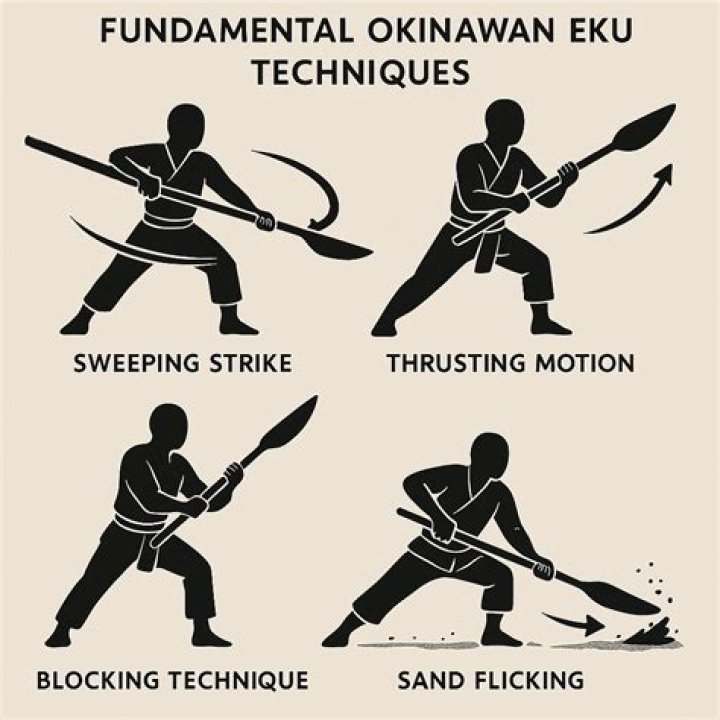
One of the primary techniques used with the Eku is the "swinging strike," which involves using the weight and momentum of the weapon to deliver powerful blows. Practitioners learn to harness the leverage provided by the Eku's long handle to execute sweeping movements that can cover a wide area. This technique requires precise timing and control to be effective, making it a challenging yet rewarding skill to master.
Another fundamental technique is the "thrust," where the practitioner uses the Eku's blade to deliver a direct, linear strike. This movement relies on the practitioner's ability to generate power from their core and transfer it through the weapon. The thrust is often used to target specific points on an opponent, requiring accuracy and precision.
In addition to offensive techniques, the Eku is also used for defense. Practitioners learn to block and parry incoming attacks using the weapon's blade and handle. These defensive movements require a deep understanding of timing and positioning, as well as the ability to anticipate an opponent's actions.
Advanced Techniques and Applications
As practitioners become more comfortable with the basic techniques of the Eku weapon, they can progress to more advanced applications that demonstrate the weapon's versatility and potential. Advanced techniques often involve complex combinations of strikes, thrusts, and defensive maneuvers, requiring a high degree of skill and coordination.
One such advanced technique is the "spinning strike," where the practitioner uses the Eku's length and momentum to execute rapid, circular movements. This technique can be used to disorient an opponent and create openings for further attacks. The spinning strike demands precise control and balance, as well as an understanding of how to use the weapon's weight to generate power.
Another advanced application involves the use of the Eku for joint manipulation and control. Practitioners learn to use the weapon's handle to apply pressure to an opponent's joints, allowing them to immobilize or redirect attacks. This technique requires a deep understanding of human anatomy and the ability to execute movements with precision and finesse.
Advanced Eku practitioners also explore the use of "feints" and "deceptive maneuvers" to outsmart opponents. By creating false openings or misleading movements, practitioners can manipulate an opponent's perception and create opportunities for effective strikes.
Training and Practice Methods
Training with the Eku weapon involves a combination of solo practice, partner drills, and sparring exercises. These methods help practitioners develop the skills and attributes necessary to wield the weapon effectively.
Solo practice, often referred to as "kata," involves performing pre-arranged sequences of movements that simulate combat scenarios. These sequences help practitioners internalize the techniques and principles of the Eku, allowing them to develop muscle memory and refine their skills. Kata practice also emphasizes the importance of proper form, timing, and focus.
Partner drills are another essential component of Eku training. These exercises involve practicing techniques with a partner, allowing practitioners to apply their skills in a more dynamic and interactive context. Partner drills help develop attributes such as timing, distance management, and adaptability, as practitioners learn to respond to the movements of an opponent.
Sparring exercises provide an opportunity for practitioners to test their skills in a controlled, competitive environment. Sparring helps develop attributes such as speed, reflexes, and decision-making, as practitioners must react to unpredictable situations and adapt their techniques accordingly. Safety gear and guidelines are typically used to minimize the risk of injury during sparring sessions.
Eku in Modern Martial Arts
In modern martial arts, the Eku weapon continues to be a valuable tool for practitioners seeking to expand their skills and explore traditional techniques. While the Eku is most commonly associated with Okinawan martial arts such as Kobudo, its principles and techniques can be adapted and integrated into a variety of styles.
Many martial artists appreciate the Eku for its unique challenges and the opportunity to develop attributes such as balance, coordination, and timing. The weapon's distinctive design and movements provide a refreshing contrast to more conventional martial arts weapons, offering practitioners a chance to explore new approaches to combat.
The Eku is also a popular choice for martial arts demonstrations and competitions, where practitioners showcase their skills and creativity. These events help promote the Eku and raise awareness of its historical and cultural significance, ensuring that the weapon's legacy continues to thrive in the modern martial arts community.
Comparisons with Other Martial Arts Weapons
When comparing the Eku weapon to other martial arts weapons, several unique characteristics set it apart. The Eku's design, with its long handle and flat blade, offers a distinctive approach to combat that emphasizes leverage, reach, and momentum.
Unlike traditional bladed weapons such as swords or spears, the Eku relies on its weight and balance to generate power, making it an ideal choice for practitioners who value precision and control. The Eku's design allows for a wide range of techniques, from sweeping strikes to thrusts and joint manipulations, offering practitioners a versatile tool for combat.
Compared to shorter weapons like the bo staff or nunchaku, the Eku provides greater reach and leverage, allowing practitioners to engage opponents from a distance and control the flow of combat. This makes the Eku particularly effective in situations where maintaining distance and managing space are crucial.
Overall, the Eku's unique design and principles make it a valuable addition to any martial artist's repertoire, offering a fresh perspective on traditional weaponry and combat techniques.
Notable Practitioners and Masters
Throughout history, several notable practitioners and masters have contributed to the development and preservation of the Eku weapon. These individuals have dedicated their lives to mastering the Eku and sharing their knowledge with others, ensuring that the weapon's legacy continues to thrive.
One such notable figure is Taira Shinken, a renowned Okinawan martial artist and Kobudo master. Taira Shinken played a pivotal role in the preservation and promotion of traditional Okinawan weapons, including the Eku. His dedication to the art of Kobudo and his efforts to document and teach its techniques have made a lasting impact on the martial arts community.
Another influential practitioner is Matayoshi Shinpo, who was instrumental in popularizing the Eku and other Okinawan weapons through his teachings and demonstrations. Matayoshi Shinpo's contributions to the martial arts world have helped raise awareness of the Eku and inspire a new generation of practitioners.
These masters, along with many others, have paved the way for the continued growth and appreciation of the Eku weapon, ensuring that its rich history and techniques are passed down to future generations.
Safety and Precautions
When training with the Eku weapon, safety and precautions are of utmost importance. Due to the weapon's size and weight, practitioners must take care to prevent injury to themselves and others during practice.
One of the key safety measures is the use of proper protective gear, such as padded gloves, helmets, and body armor. These items help minimize the risk of injury during sparring and partner drills, allowing practitioners to train with confidence and peace of mind.
Practitioners should also be mindful of their surroundings and ensure that they have ample space to execute techniques without endangering themselves or others. Training in designated martial arts facilities or outdoor areas with sufficient room is recommended.
In addition to physical precautions, practitioners should also focus on mental discipline and awareness. Maintaining a clear and focused mindset during training helps prevent accidents and ensures that practitioners can respond effectively to unexpected situations.
Preservation and Promotion Efforts
Efforts to preserve and promote the Eku weapon are essential to ensuring its continued relevance and appreciation in the martial arts world. These efforts involve a combination of education, community engagement, and cultural events that celebrate the Eku's history and significance.
Martial arts schools and organizations play a crucial role in preserving the Eku by offering classes and workshops that teach its techniques and principles. These educational initiatives help introduce new generations to the Eku and inspire a deeper appreciation for its cultural heritage.
Cultural events and festivals also provide opportunities to showcase the Eku and raise awareness of its historical and artistic value. Demonstrations and performances featuring the Eku help engage audiences and foster a sense of connection to Okinawan traditions.
Through these preservation and promotion efforts, the Eku weapon continues to thrive as a symbol of Okinawan culture and a valuable tool for martial artists worldwide.
FAQs about the Eku Weapon
- What is the origin of the Eku weapon?
The Eku weapon originated in Okinawa as a wooden oar used by fishermen. It was later adapted for use in martial arts as a weapon of self-defense.
- How is the Eku weapon constructed?
The Eku is typically made from hardwoods such as oak or red oak, featuring a long handle and a broad, flat blade resembling a boat oar.
- What martial arts styles use the Eku?
The Eku is primarily used in Okinawan martial arts styles such as Kobudo, but its techniques can be adapted to other martial arts disciplines.
- What are some basic techniques of the Eku?
Basic techniques with the Eku include swinging strikes, thrusts, and defensive movements such as blocks and parries.
- Are there any notable Eku practitioners?
Notable practitioners include Taira Shinken and Matayoshi Shinpo, who have made significant contributions to the preservation and promotion of the Eku.
- How can I learn to use the Eku weapon?
To learn the Eku, consider enrolling in a martial arts school that offers Kobudo or traditional weapons training, where you can receive instruction from qualified instructors.
Conclusion
The Eku weapon, with its rich history and unique techniques, stands as a testament to the ingenuity and resilience of Okinawan culture. From its humble beginnings as a fishing tool to its revered status in martial arts, the Eku continues to captivate and inspire practitioners worldwide. Through dedicated training, preservation efforts, and cultural celebrations, the legacy of the Eku endures, offering valuable insights into the art of combat and the spirit of Okinawan tradition. Whether you are a martial artist seeking to expand your skills or a history enthusiast eager to explore traditional weaponry, the Eku weapon invites you to discover its timeless allure and enduring significance.